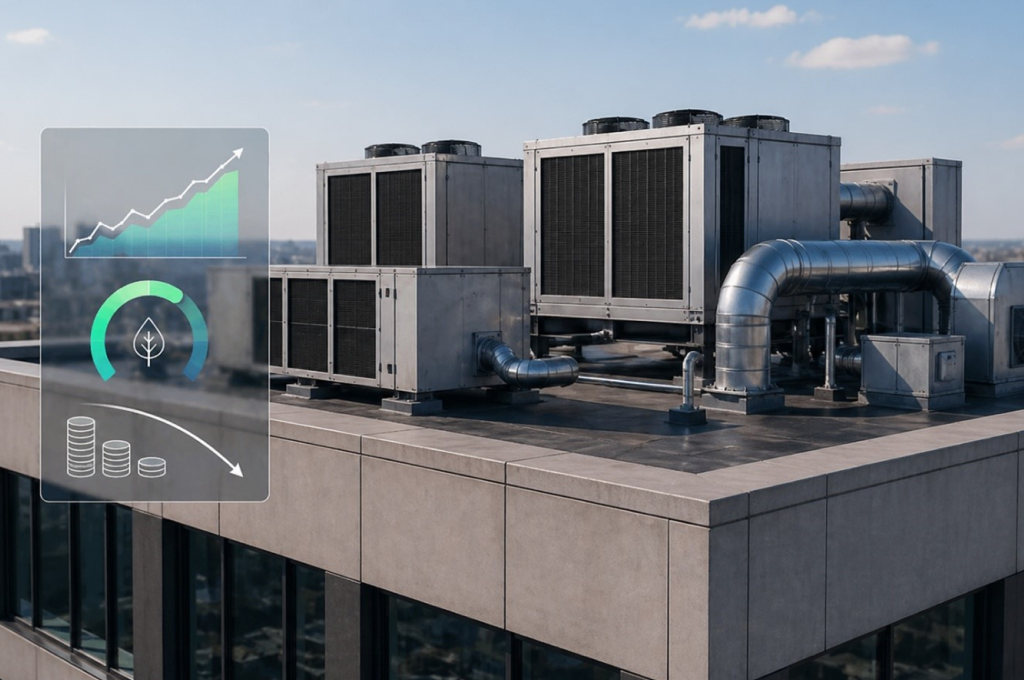
Investing in HVAC should not be evaluated only through the price of equipment and installation. Its real impact becomes visible through energy consumption, comfort, indoor air quality, the number of service interventions, and the long-term value of the building. When properly planned, HVAC does not only solve heating and cooling; it reduces operating costs and makes the space more stable for everyday use.
Buildings account for approximately 30% of global energy consumption, and a significant share of that consumption is related to heating, cooling, ventilation, and air treatment. In commercial buildings, HVAC is often one of the largest items on the energy bill. That is why the difference between an average solution and a well-selected one can become greater over the years than the difference in initial price.
The cost does not end with equipment purchase
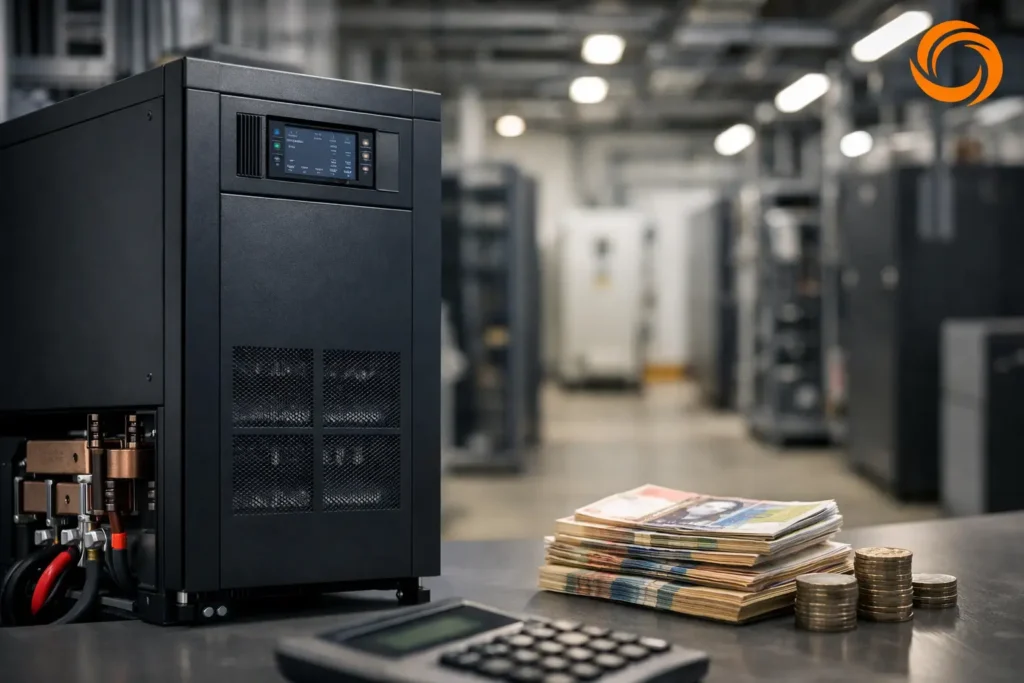
The most common mistake is evaluating HVAC only by its initial cost. A cheaper solution may seem acceptable at the time of purchase, but it can later bring higher energy consumption, more failures, and lower comfort. On the other hand, a more expensive solution does not automatically provide greater value if it is not suited to the building.
The real calculation includes several factors: how much energy the system uses, how often it operates under load, how stable it is, how long the equipment lasts, and how easy it is to maintain. In buildings used every day, such as offices, hotels, restaurants, retail spaces, or production facilities, these factors quickly become more important than the initial price difference.
Proper thermostat settings can reduce annual heating and cooling costs by up to 10%. In larger buildings, zoning, heat recovery, and smart controls can bring even greater savings, especially when the space is not used at the same intensity throughout the day.
Where the return becomes visible fastest
The greatest effect is usually seen in buildings with high energy consumption, outdated equipment, or uneven operating conditions. If the system often runs at maximum capacity, if certain areas are constantly too warm or too cold, or if users frequently complain about air quality, noise, or temperature changes, there is room for significant improvement.
In commercial buildings, the benefit is not visible only on the energy bill. Better working conditions mean fewer complaints, more stable productivity, and a more pleasant environment for employees and clients. In hotels and restaurants, good HVAC affects the guest experience. In industry, warehousing, and technical facilities, it can also affect equipment, goods, or process continuity.
In practice, the fastest return is achieved when the solution is not limited to new equipment, but also includes better control, system balancing, proper maintenance, and operational optimization based on how the space is actually used.
Energy efficiency must be linked to comfort
Efficiency is not only lower consumption. If a system saves energy by making the space uncomfortable, it is not a good solution. The goal is to achieve stable temperature, good indoor air quality, and rational energy use at the same time.
That is why proper sizing plays a major role. An oversized system can operate in short cycles, turn on and off more often, and control humidity less effectively. An undersized system can run constantly under load, consume more energy, and wear out faster. In both cases, the user gets a weaker result, even if the equipment itself is technically correct.
The best effect is achieved when equipment, insulation, ventilation, controls, and user habits are aligned. In that case, HVAC does not work more than necessary, but also not less than the space requires.
Long-term value for the building
A quality HVAC system improves the usability of a space. An apartment or house becomes more comfortable to live in. An office becomes a more stable working environment. A hotel, restaurant, or store becomes a place where users stay more comfortably and naturally. Industrial and technical facilities gain greater operational predictability.
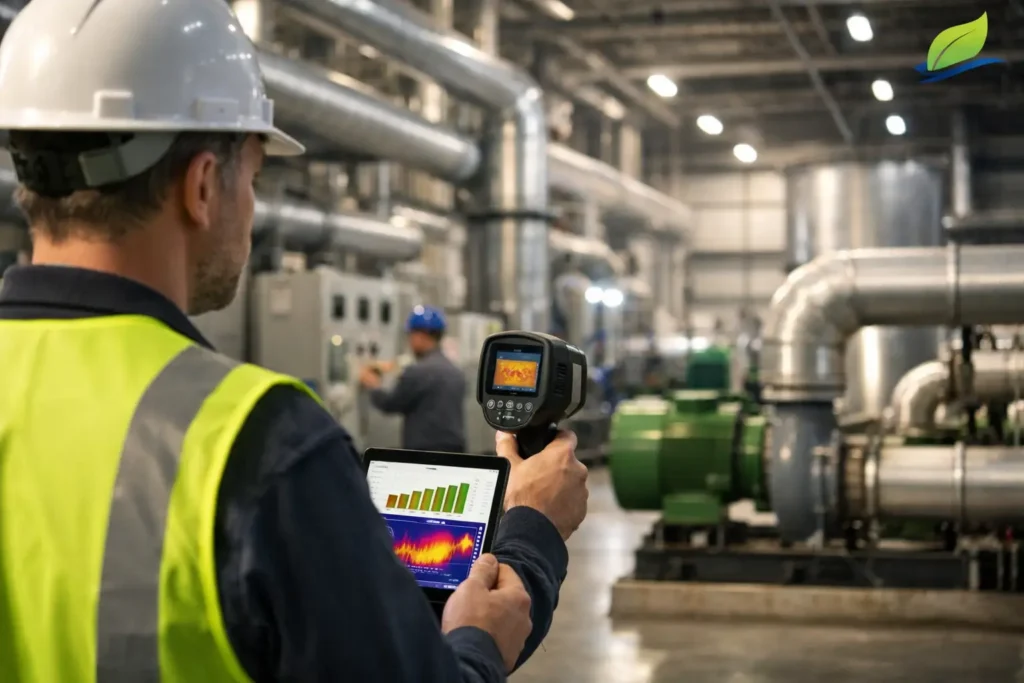
In the long term, a well-selected solution means lower bills, fewer interventions, longer equipment life, and better control over indoor conditions. In new buildings, this means smarter planning from the start. In existing buildings, it is often enough to begin with an energy-use analysis, equipment inspection, and identification of the zones causing the greatest problems.
HVAC is most cost-effective when it is not purchased as an isolated device, but planned as part of the whole building. Its value is then not only in heating and cooling, but in everyday savings, stable comfort, and a lower risk of expensive corrections later.