Dry-Type or Oil-Immersed Transformer

When selecting a power transformer, one question arises in almost every project: dry-type or oil-immersed?


Both types perform the same function, but in different ways, and the price difference is significant enough to require proper evaluation rather than a decision based on habit.


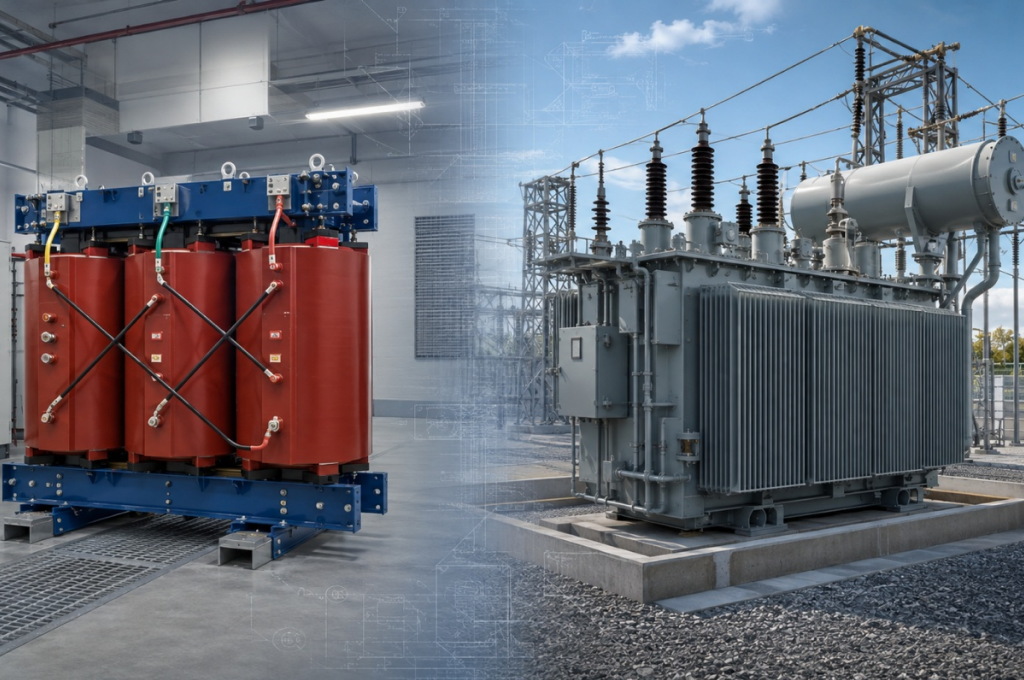
In an oil-immersed transformer, the windings are submerged in oil, which provides both insulation and cooling. In a dry-type transformer, the insulation is made of epoxy resin and cooling is provided by air.
Almost every other difference between the two designs stems from this basic construction principle: fire behaviour, installation location, maintenance requirements and cost.


An oil-immersed transformer is generally less expensive for the same rated power, has lower losses and handles overloads better because the oil dissipates heat more efficiently.


For stand-alone outdoor transformer substations, conventional industrial applications and higher power ratings, the oil-immersed transformer is the standard choice.


The disadvantage is the oil itself. An oil containment bund or collection pit is required in the event of leakage, the condition of the oil must be checked periodically, and the design must account for the fact that transformer oil is flammable and therefore introduces additional fire-protection requirements.
A dry-type transformer contains no oil, which eliminates the risk of oil leakage and the additional fire load associated with it.


For this reason, it is usually the preferred choice for indoor installations, including basements of office buildings, shopping centres, hospitals, data centres and industrial halls where the transformer substation is located within the production facility itself.


Maintenance is simpler and mainly consists of cleaning and inspections, while resistance to moisture and dust depends on the selected protection and environmental class.
The purchase price is higher, losses are usually slightly greater, and sensitivity to prolonged overloads is more pronounced than with oil-immersed transformers.
In practice, the decision primarily comes down to location and risk.
For an outdoor substation located away from buildings, an oil-immersed transformer usually provides better value for money.


For a substation installed inside a building or immediately adjacent to areas occupied by people, a dry-type transformer is generally the more appropriate choice because fire safety and simpler maintenance outweigh the difference in purchase price.


Between these two clear situations lies a grey area in which the decision should be based on a total cost analysis, including procurement, lifetime energy losses, maintenance and fire-protection measures.


When all costs are assessed over a thirty-year operating life, the transformer with the lower purchase price is not always the transformer with the lower total cost of ownership.
A Transformer Substation for a Solar Power Plant Is Not the Same as One Designed for Consumption

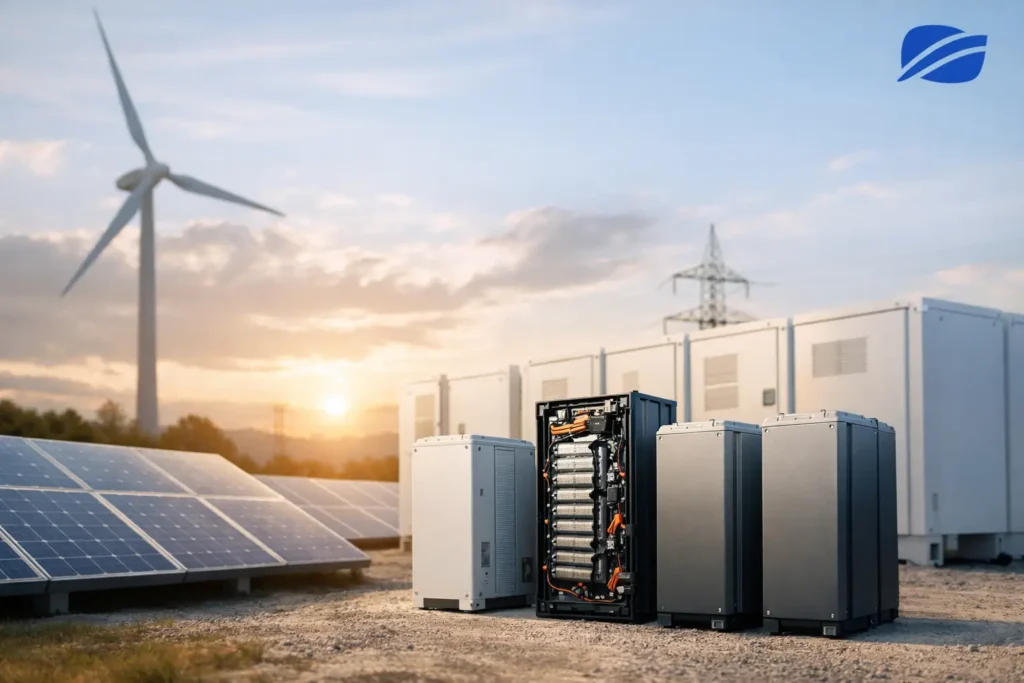
At first glance, a transformer substation is simply a transformer substation: a transformer, medium-voltage switchgear and distribution equipment.

What Happens When a Transformer Fails?

Transformer failure is not something companies like to think about because it is relatively rare.

Transformer Substation Maintenance: What, How Often and Who Is Qualified to Perform It

A transformer substation is a piece of equipment that rewards routine.

One Large Transformer or Two Smaller Ones

When designing a transformer substation for a larger industrial facility, a question eventually arises that may seem like a minor detail but actually determines the facility’s reliability for the next thirty years: should the system use one transformer with the full required capacity, or two smaller transformers that provide the same combined capacity?

Transformer Losses: A Cost That Runs 24 Hours a Day

A transformer is one of the most efficient machines ever created, with an efficiency that exceeds 98 percent.

Guide to Connecting to the Medium-Voltage Grid

Connecting a facility to the medium-voltage grid is a procedure with clearly defined steps, but there are also enough points where a project can lose several months if those steps are carried out in the wrong order.

Your Own Transformer Substation or a Connection Through a Third-Party Substation

Many companies operate for years connected to the low-voltage network through a distribution transformer substation. They only begin considering their own substation when the distribution system operator informs them that no additional capacity is available for a planned expansion.

Transitioning the Grid from 10 kV to 20 kV: What It Means for Your Equipment

For decades, Serbia’s distribution network has operated with two medium-voltage levels: 10 kV and 20 kV.

Learn more

Enter your information to receive more information on the selected topic

Planiraj svoju elektranu

Odgovorite na pitanja ispod kako bi naš inženjerski tim mogao da uradi studiju izvodljivosti nakon koje će vas kontaktirati.

Nakon dostavljanja podataka, naš stručni tim će analizirati Vaš zahtev i pripremiti personalizovanu ponudu sa predlogom optimalnog solarnog sistema za Vaš objekat. Kontaktiraćemo Vas kako bismo predstavili predloženo tehničko rešenje, očekivanu proizvodnju električne energije i odgovorili na sva Vaša pitanja u vezi sa realizacijom projekta.

Solarna elektrana omogućava dugoročno smanjenje troškova električne energije, veću energetsku nezavisnost domaćinstva i doprinosi očuvanju životne sredine korišćenjem energije iz obnovljivih izvora.

Planiraj svoju elektranu

Odgovorite na pitanja ispod kako bi naš inženjerski tim mogao da uradi studiju izvodljivosti nakon koje će vas kontaktirati.

Nakon dostavljenih podataka za izradu studije izvodljivosti, i kada naš inženjerski tim uradi studiju izvodljivosti, predlažemo da organizujemo sastanak gde bismo Vam prezentovali studiju. Takođe, tom prilikom ćemo detaljnije pričati o samoj investiciji i benefitima ulaganja u obnovljive izvore energije, kao i o mogćim otpisima putem dostupnih fondova (IPARD, RAS, EBRD).  

Pored uštede električne energije, solarnom elektranom možete generisati i dodatne benefite kao što su direktran uticaj na smanjenje emsije CO2 što može direktno uticati na konkurentnost prilikom izvoza na tržištu EU, kao i dodatne benefite uštede hlađenja.

Planiraj svoju elektranu

Izaberite tip objekta za koji želite da planirate solarnu elektranu