
Electricity costs do not increase linearly. In manufacturing, logistics, cold storage, processing, and data centers, a single price spike or power outage can disrupt the entire business equation. That is why the “turnkey solar power system” model is not viewed merely as a way to install panels on a roof, but as a strategic investment in cost stability, risk control, and long-term energy planning.
When a company chooses a turnkey solution, it is effectively choosing not to divide responsibility between designers, contractors, equipment suppliers, and service providers. That is the core principle. A single partner takes ownership of the technical and operational entirety of the project—from consumption analysis and feasibility study to commissioning and maintenance. For companies that cannot afford improvisation, this is not a convenience, it is a rational decision.
What “Turnkey Solar” Really Means
The term is often used too broadly in the market. In practice, a turnkey solar system means that the investor is not purchasing equipment alone, but a complete engineering delivery model. This includes site assessment, system sizing based on consumption profile, technical documentation, component selection, installation, electrical works, testing, commissioning, and after-sales support.
A serious project begins long before installation. Without precise consumption analysis, the system may be oversized or undersized. In the first case, capital is tied up unnecessarily. In the second, potential savings remain unrealized. That is why a qualified partner first evaluates tariff-based consumption, peak loads, seasonal variations, available surface area, shading, roof condition, grid connection possibilities, and regulatory requirements.
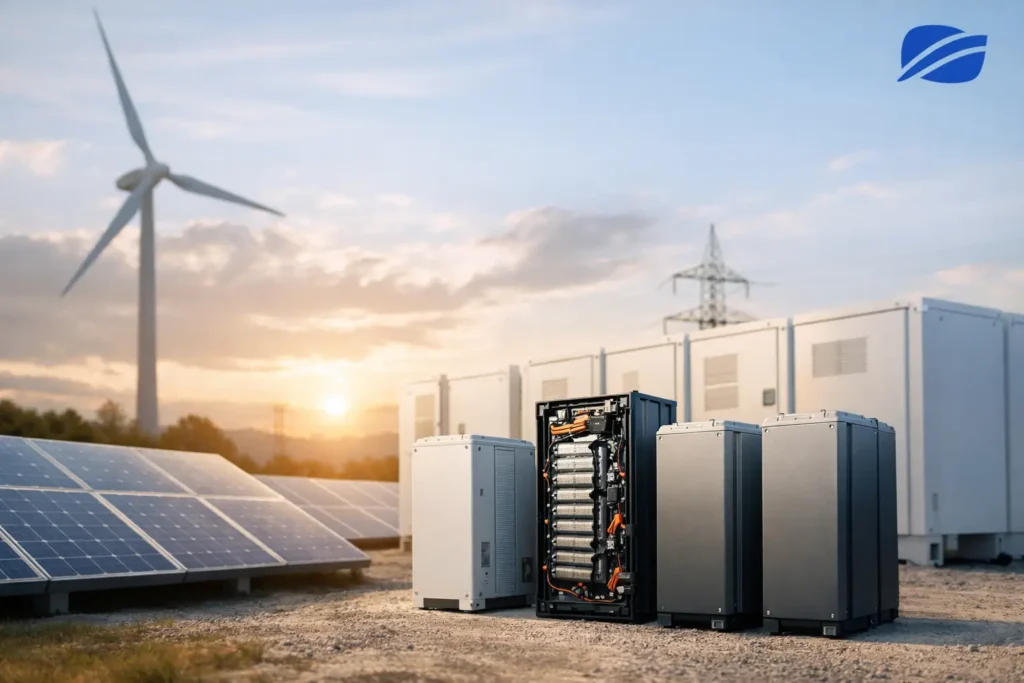
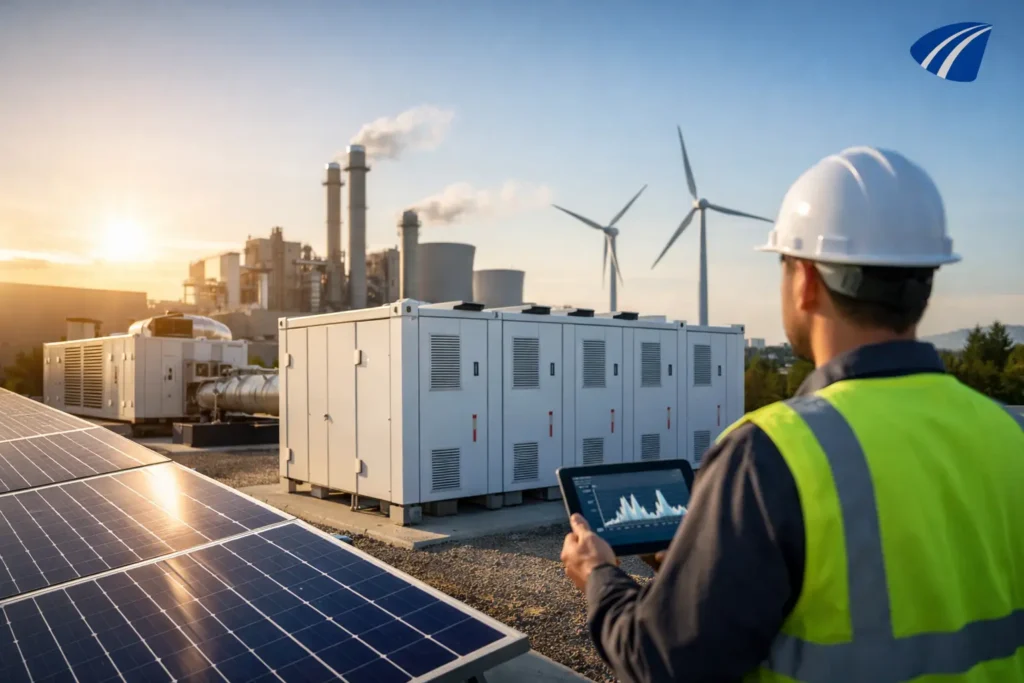
In industrial systems, additional value lies in integration. Solar is not a standalone element, it must operate in alignment with existing energy infrastructure, including UPS systems, battery storage, generators, HVAC equipment, and internal operational regimes. This is where the difference between delivering equipment and delivering a solution becomes clear.
Why Businesses Are Choosing Turnkey Models
The primary driver is not only electricity cost savings, although that remains important. Companies are increasingly seeking predictability. By covering part of their consumption through self-generation, they reduce exposure to market volatility and gain greater control over operational costs.
The second reason is accountability. In multi-contractor projects, a common issue arises when performance deviates, responsibility is fragmented. Designers may blame installation, contractors may blame design, and suppliers may point to configuration issues. In a turnkey model, this gray zone is significantly reduced.
The third reason is speed of execution. When a single team manages the entire process, construction, electrical, and administrative steps are better coordinated. This is particularly important for companies aligning investments with budget cycles, subsidies, or planned production downtime.
From Concept to Commissioning
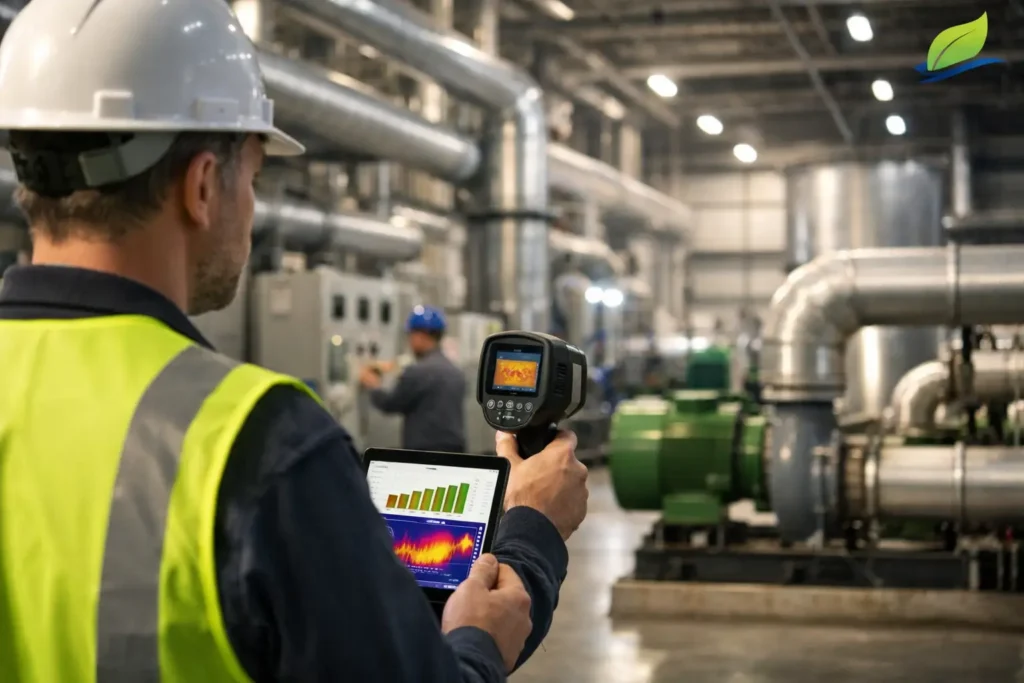
The process begins with energy and technical analysis. The goal is not simply to determine how many panels can fit on a roof or site, but how much the system should produce to make the investment viable. A factory with daytime operations and single-shift work requires a different sizing strategy than a cold storage facility or a site with 24/7 load distribution.
Next comes the feasibility study. It should define expected production, self-consumption ratio, estimated payback, technical constraints, and potential risks. If the roof is aging, structural reinforcement may be required. If shading is present, part of the area may not be viable. If the consumption profile is unfavorable, battery storage may significantly improve project economics.
This is followed by system design and equipment selection. There is no universal approach. Some facilities prioritize cost per installed kilowatt, while others require higher long-term yield, better efficiency, or stronger manufacturer support. In advanced systems, factors such as module degradation, inverter performance at high temperatures, monitoring compatibility, and scalability are also critical.
Only after the design logic is fully defined does execution begin. Installation quality mounting, protection, cabling, grounding, and configuration directly impacts safety and performance. The final phase is not a formality: testing and commissioning confirm that the system performs as designed.
Profitability of Turnkey Solar Systems
Profitability depends on multiple factors and must be evaluated precisely. Payback is primarily influenced by the current electricity price, consumption profile, the share of energy consumed at the time of production, and the quality of system design. Companies with high daytime consumption typically achieve better financial outcomes than those with dominant nighttime usage.
Total Cost of Ownership (TCO) is equally important. The lowest upfront offer is rarely the most profitable over a 10–25 year period. If modules have weaker temperature performance, if inverters experience frequent downtime, or if service support is inadequate, the investment loses value over time. That is why serious investors evaluate not only CAPEX, but total lifecycle costs.
For commercial and industrial users, additional value lies in business continuity. When solar systems are integrated with battery storage, UPS infrastructure, or other backup solutions, the benefit extends beyond cost savings to operational resilience. In certain sectors, this can be as important as energy production itself.
Where Mistakes Most Commonly Occur
The first mistake is making decisions based solely on cost per kilowatt. While it may seem logical, it can be misleading. Two systems with the same nominal capacity can have very different yields, reliability levels, and maintenance costs.
The second mistake is ignoring consumption data. Systems designed without real load analysis may appear attractive in proposals but underperform in operation. In industrial environments, hourly and seasonal consumption profiles significantly impact results.
The third mistake is underestimating system integration. A rooftop solar system may appear simple on paper, but in practice it must be integrated with protection systems, distribution networks, monitoring platforms, and operational logic. For complex users, this is an engineering challenge not just installation work.
How to Evaluate a Project Partner
If you are considering a turnkey model, review references in segments like your own. A small commercial installation is not comparable to a system for a manufacturing plant, logistics center, or critical infrastructure. The partner must understand load characteristics, system availability requirements, safety standards, and the cost of downtime.
It is equally important that the partner covers the full value chain analysis, design, execution, and maintenance. When one organization understands both energy systems and electrical infrastructure, including storage, the result is a technically coherent project rather than a collection of separate components.
For companies seeking this approach, Energize positions project planning exactly where it should begin with analysis, not catalog-based offers. This difference becomes visible only when the system enters full operation.
Turnkey Does Not Mean the Same for Everyone
For households, it represents simplicity and clear communication. For businesses, it means risk control, project alignment, and reliable performance. For investors in larger renewable energy projects, it reflects the partner’s ability to manage complex processes involving multiple technical and regulatory layers.
In other words, “turnkey” is not a standardized package. It must be tailored to the type of facility, load profile, budget, and investment objectives. Some prioritize faster payback. Others prioritize energy stability. Some focus on future integration of battery storage or capacity expansion. A well-designed project identifies these priorities at the beginning—not after the system is installed.
The true value of a solar power system is not measured by how quickly it is installed, but by how reliably it operates and how precisely it aligns with your business. When designed correctly, solar is no longer just an investment cost it becomes a core element of energy control that companies no longer leave uncertainty.