How to Choose a System That Saves Energy and Money
In a world where every power outage can cost tens of thousands of euros per hour and electricity bills keep rising, a modular UPS system is no longer just “insurance” – it’s a smart investment in the future. But with so many models on the market, how do you know which one will truly cut costs, boost reliability, and grow with your business?
Here are 4 practical steps that will help you make a decision based on real needs, not just catalogue specs. The steps are based on current EU standards (Code of Conduct for datacentres) and real-world experience – from small IT rooms to large data centres.
Step 1: Precisely Define Your Power Needs and Scalability
The first and most important step is knowing exactly what you need today – and tomorrow.
– What is your current critical load (in kW/kVA)?
– Do you plan for growth (AI servers, data centre expansion, solar integration)?
– Do you need a 3-phase or 1-phase system?
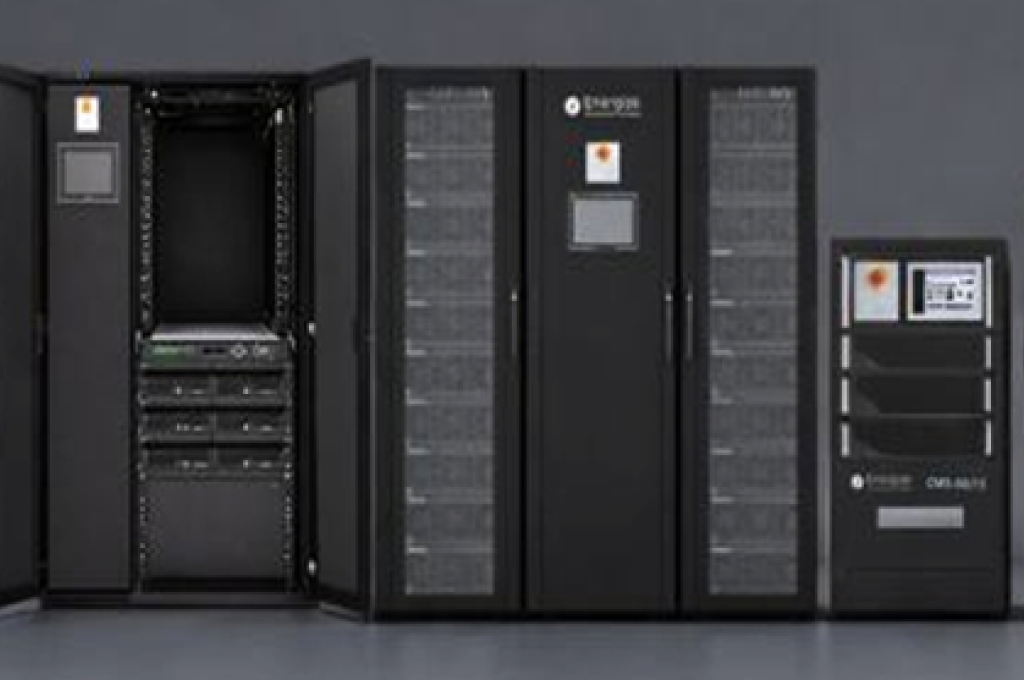
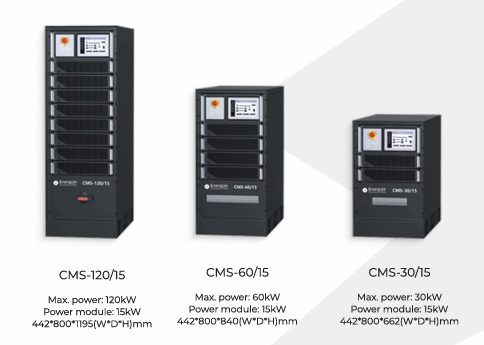
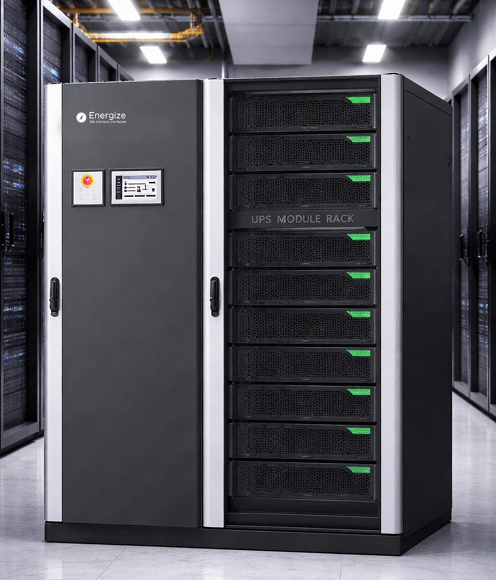
Modular UPS systems solve this perfectly with the “pay-as-you-grow” principle. Instead of buying one large monolithic unit upfront, you add 15 kW, 25 kW, 50 kW or 75 kW modules as needed – without shutting down the system.
Practical tip: Calculate N+1 or N+X redundancy. For example, for 200 kW load with 50 kW modules you need only 5 active + 1 spare. This cuts the initial cost by 30–40 % compared to traditional systems.
What to check in the spec sheet: Hot-swap support, cabinet dimensions (e.g. 800×850×2000 mm for smaller systems) and compatibility with generators/solar batteries.
Step 2: Make Energy Efficiency and TCO Your Top Priority
Energy efficiency is not a “nice-to-have” – it is the main cost-saving factor.
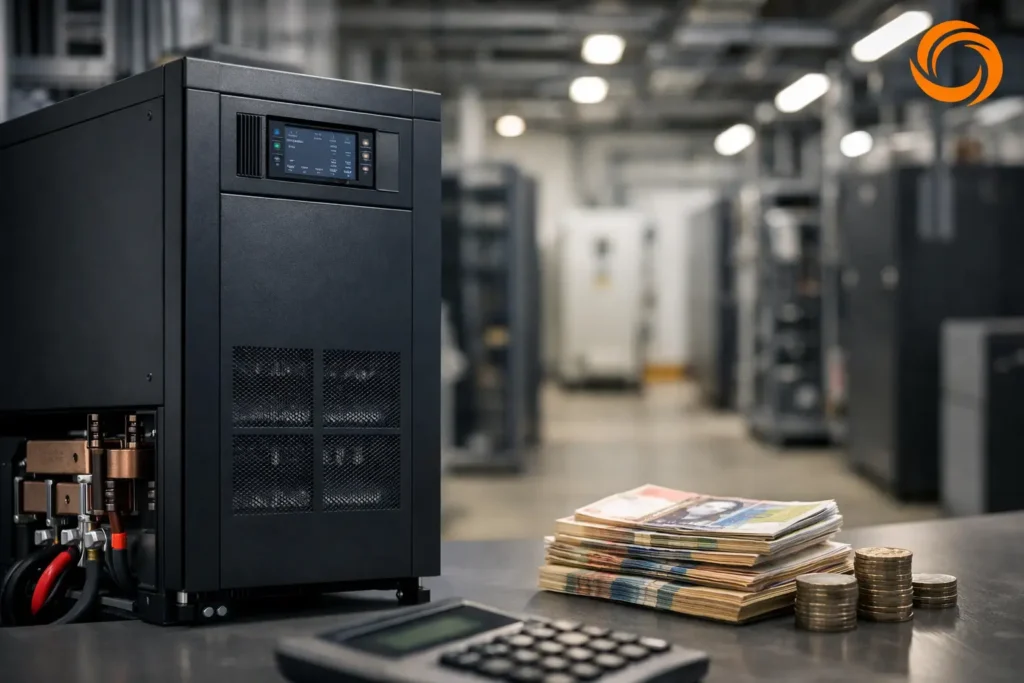
Modular UPS systems run 24/7, so even 1 % better efficiency on a 500 kW system saves 10–20 thousand euros per year on electricity + cooling.
Key metrics you must demand (2026 standards):
– Double-conversion mode: minimum 96.5–98 % (better systems exceed 97.5 %).
– Eco / IECO / ESS mode: 98–99.5 % when the grid is stable.
– Weighted efficiency per IEC 62040-3 Annex J (25/50/75/100 % load) – this is what the EU Code of Conduct Elite requires for data centres.
– Output Power Factor (PF) = 1 and THDi < 5 %.
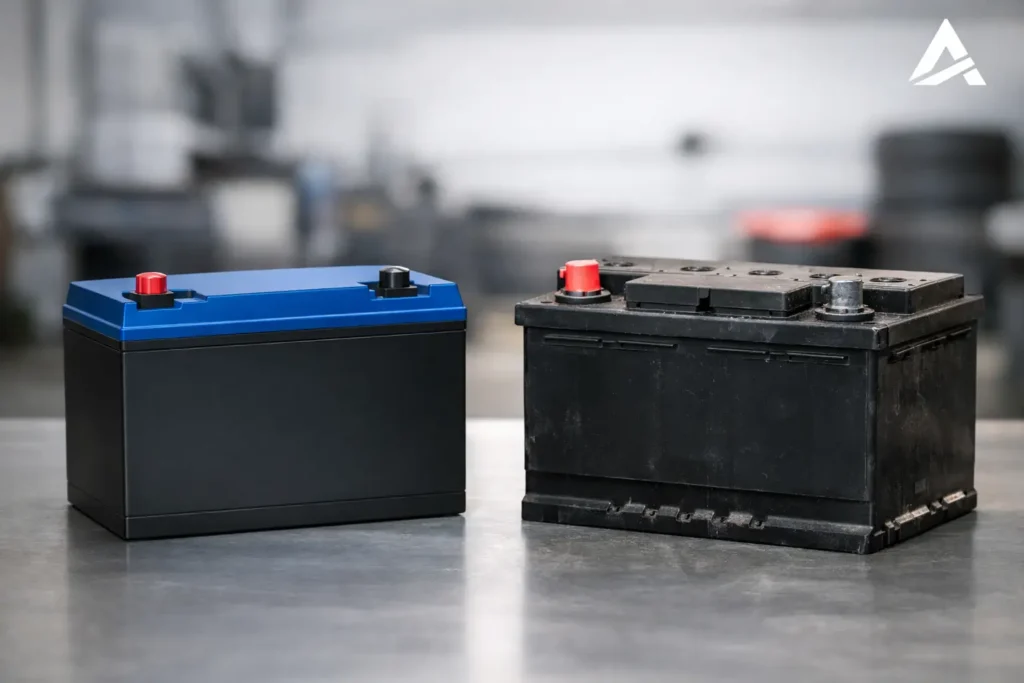
Systems with Li-ion batteries (LFP cells, 3-level BMS, up to 6C discharge, 3000+ cycles, 10-year life) reduce TCO by 30–50 % compared to lead-acid – smaller footprint, higher temperature tolerance (-20 °C to +60 °C) and almost zero maintenance.
Step 3: Verify Reliability, Redundancy and Safety
Reliability is measured by availability – aim for 99.999 % (“five nines”).
Modular architecture with decentralized control and physical separation of cold/hot air ducts drastically reduces single-point-of-failure risk.
What to look for:
– N+1 / N+X / 2N redundancy
– Hot-swap module replacement in under 5 minutes
– Full compatibility with Li-ion batteries and solar storage
– Communication: Modbus, SNMP, dry contact for central monitoring
Battery safety: 3-level BMS (module → cabinet → system) with multi-state monitoring is today’s standard for premium solutions.
Step 4: Consider Installation, Maintenance and Future-Proofing
Small footprint, fast installation and low maintenance costs are what separate good from excellent systems.
Modular UPS units are standardized, lighter and take 30–50 % less space than older models.
Additional 2026 factors:
– Compatibility with future AI loads (high power density)
– 3–5 year warranty + extended support
– Certifications: CE, RoHS, IEC 62040-3 Class 1
Final check
Create a 10-year TCO calculation (CapEx + OpEx + energy + cooling + battery replacement). The cheapest system on paper often turns out to be the most expensive in practice.
Conclusion
The right modular UPS is not the one with the lowest price tag – it’s the one that delivers the lowest TCO, highest flexibility and peace of mind. By following these 4 steps you will avoid mistakes and choose a system that grows with your business.
For practical examples of advanced modular solutions (30–900 kVA with 15–75 kW modules, 96.5 % efficiency and full Li-ion support) check current systems on energize.rs – they are an excellent real-world illustration of how these steps work in Serbian and regional projects.