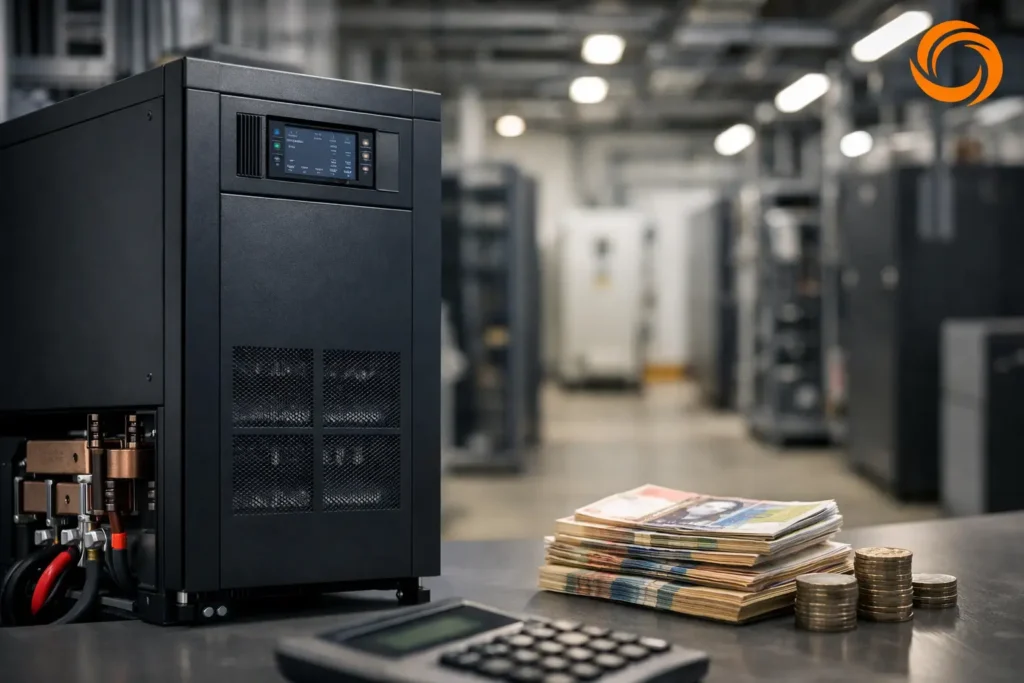
A power interruption lasting only a few seconds can stop an automated production line, bring down server infrastructure, disrupt the cold chain, or generate significant scrap. That is why planning energy redundancy is not simply a matter of purchasing a generator or UPS system. It is an engineering decision that defines which business functions must remain operational, for how long, and under what conditions.
A properly engineered redundant system does more than provide an alternative source of electrical power. It manages transitions between power sources, protects sensitive equipment from power quality disturbances, enables controlled shutdown of processes when necessary, and provides management with a measurable relationship between investment, operational risk, and Total Cost of Ownership.
Start with the Consequences of an Outage, Not the Equipment
One of the most common mistakes is to begin system specification by asking how large the generator should be. The first step should be to determine the consequences of an outage for each part of the business. In manufacturing, downtime can mean a lost production shift, damaged raw materials, or the need to recalibrate machinery. In logistics, the risk may involve warehouse management software, loading systems, or refrigerated storage. In data centers and telecommunications, even very short voltage disturbances can be critical.
Loads should therefore be classified according to their criticality. The first category includes loads that must not experience any interruption during source transfer, such as servers, PLC control systems, network equipment, security systems, and critical medical or process equipment. The second category includes loads that can tolerate a brief interruption but must resume operation within a limited period. The third category consists of loads that can be safely disconnected to preserve energy for critical processes.
This classification prevents two costly extremes: an oversized system that provides unnecessary backup capacity for every load, and an undersized solution that fails to protect what actually matters during a real incident.
Define the Required Autonomy and Maximum Permissible Interruption
Two parameters largely determine the system architecture: the maximum permissible interruption time and the required backup autonomy. For IT equipment, the acceptable interruption may effectively be zero milliseconds, making an online UPS essential. Some industrial equipment may tolerate an interruption of several seconds while a generator starts and stabilizes. For administrative facilities, the priority may be controlled shutdown rather than several hours of uninterrupted operation.
Required autonomy also varies by application. A battery-based UPS is typically designed to bridge the period until the generator reaches stable operation or until equipment can be shut down safely. A BESS can perform a broader role by supporting critical loads, managing peak demand, integrating on-site solar generation, and optimizing energy consumption. A diesel generator is generally more economical for extended outages, but requires reliable fuel supply, periodic maintenance, and regular testing.
How to Plan Energy Redundancy in Layers
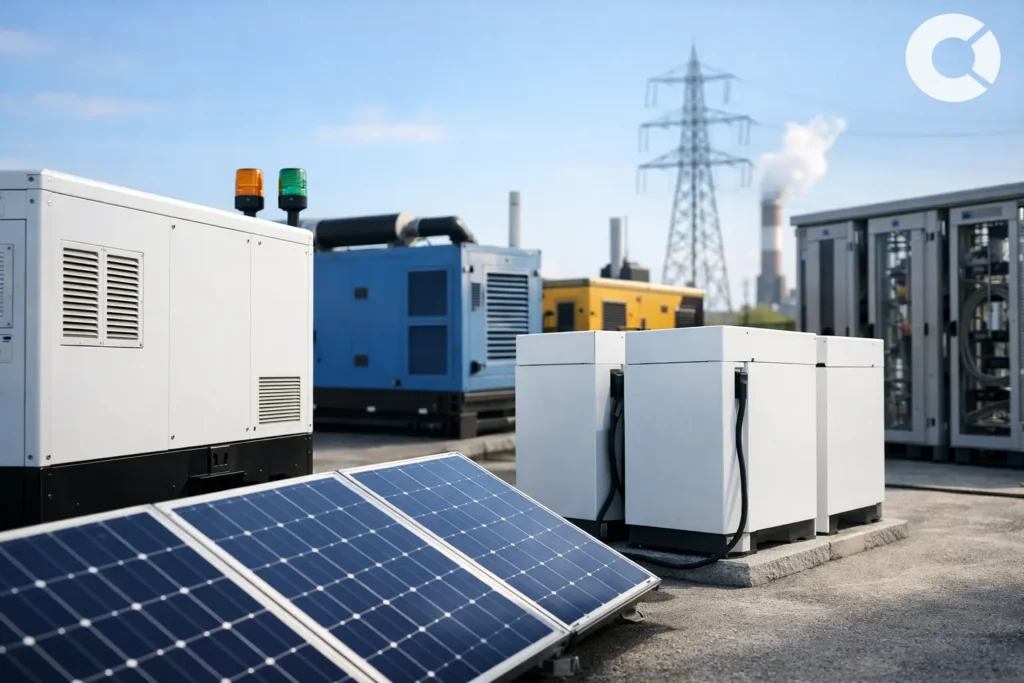
A reliable solution is designed in layers because each component addresses a different type of risk. The utility grid serves as the primary source. A UPS protects against micro-outages, voltage sags, and power quality disturbances. A generator provides backup during extended outages. Battery energy storage can provide an immediate response, extend autonomy, and create additional value through energy management. A solar power plant reduces grid consumption but does not provide backup power during a utility outage unless it is integrated with appropriate inverters, a BESS, and an island-mode operating strategy.
Automation is the critical link between these power sources. The Automatic Transfer Switch (ATS), source synchronization, protection settings, and Energy Management System must all be coordinated with the facility’s actual operating conditions. It is not enough for each individual component to have sufficient capacity. The complete system must respond reliably when utility power fails, when it returns, when the generator fails to start, or when the battery reaches its minimum permitted State of Charge.
Redundancy is commonly described using N, N+1, and 2N architectures. An N configuration provides the minimum required capacity without a redundant unit. N+1 adds one backup component such as an additional UPS module or generator, so that the system can tolerate a single unit failure. A 2N architecture provides two completely independent power paths. This approach is justified for data centers, critical infrastructure, and processes where downtime carries exceptionally high costs, but it is not automatically the most rational solution for every industrial facility.
Active Power Is Not the Only Sizing Parameter
System design must account for active and reactive power, power factor, motor starting currents, harmonics, nonlinear loads, and future capacity expansion. A generator that appears capable of supporting the total rated load on paper may struggle when large motors, compressors, or pumps start simultaneously. Similarly, a UPS may be incorrectly sized if peak loads and the electrical characteristics of the connected equipment are overlooked.
Systems with variable frequency drives, rectifiers, chargers, and significant IT loads require particular attention. Their impact on power quality and protection coordination must be analyzed before equipment is selected. In a properly engineered project, this means measuring actual consumption, analyzing the single-line diagram, reviewing existing protection systems, and simulating critical operating scenarios.
Batteries, Generators, or BESS: The Choice Depends on the Risk Profile
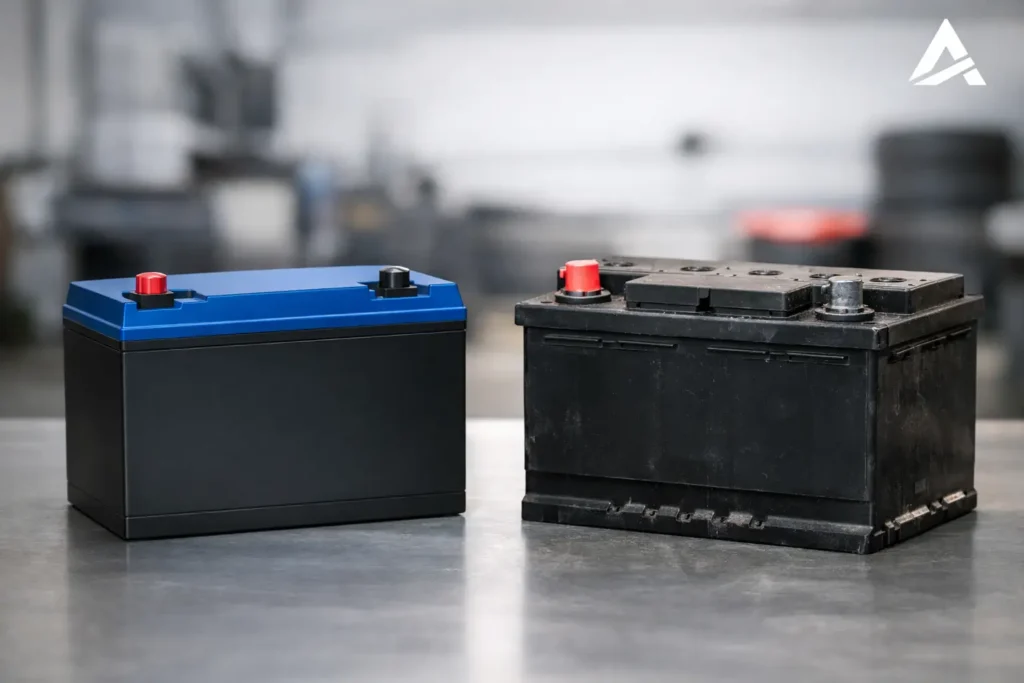
A UPS with industrial batteries is appropriate when uninterrupted operation and power quality are critical and required autonomy is measured in minutes or relatively short periods. Its main advantage is immediate response. Limitations include space requirements, temperature sensitivity, battery service life, and the need for disciplined maintenance.
A diesel generator remains one of the most practical solutions for several hours of backup operation in many industrial facilities. Its reliability depends on fuel availability, starter batteries, ventilation, exhaust systems, fire protection, and regular testing under load. A generator tested only without load may pass routine checks but still fail when it is actually required to support production.
A BESS becomes particularly relevant when a company requires more than backup power. In addition to supporting business continuity, it can reduce peak demand, support solar generation, mitigate short-term grid disturbances, and provide greater control over energy costs. However, its economic viability depends on the facility’s load profile, operating strategy, tariff structure, required autonomy, and whether the battery can generate value throughout the year rather than being used only during rare grid outages.
Design for the Failure Points That Are Often Overlooked
Energy redundancy is incomplete if there is only one critical switchboard, one cable route, or one control system that can become a single point of failure. Facilities with high availability requirements should consider separate power feeds, protection selectivity, physically separated cable routes, redundant cooling systems for UPS and battery rooms, and continuous monitoring of temperature, humidity, and battery condition.
Cooling requires particular attention. Temperatures above the permitted operating range can reduce available battery capacity, shorten battery life, and compromise electrical equipment. In data centers and technical rooms, energy redundancy and HVAC redundancy must be planned together. Backup power without adequate cooling does not provide true business continuity.
Future growth must also be considered. If production lines are expanded or new chargers, compressors, or servers are added, a system designed at the very limit of its capacity can quickly become a constraint. A defined capacity reserve is therefore sensible, but unnecessarily oversizing the system is not. A feasibility study should identify expected load growth and determine the most cost-effective point for modular expansion.
Testing Is Part of the Project, Not a Final Formality
A system that has not been tested under realistic scenarios cannot be considered proven redundancy. The testing plan should include simulated utility outages, generator start-up under load, transfer of critical loads, return to utility power, alarm conditions, and operation during partial component failure. Results should be documented, and responsible personnel must understand which processes occur automatically and when manual intervention is required.
After commissioning, maintenance preserves the value of the investment. Periodic UPS and battery inspections, generator testing, fuel checks, thermographic inspections of electrical connections, verification of protection settings, and updates to operating procedures are required as facility processes evolve. Redundancy is not static: changes in load can also change the actual level of protection the system provides.
Energize approaches these projects as an integrated energy system, from load analysis and feasibility studies to the integration of UPS systems, generators, BESS, solar power plants, HVAC, and energy management. This prevents responsibility from being fragmented across multiple suppliers and keeps the technical solution aligned with the investor’s business objectives.
The true value of redundancy is not visible while the grid is operating normally. It becomes clear at the moment of an outage, when critical processes continue without improvisation, personnel know exactly how to respond, and the investment protects production, data, and the company’s reputation. That is why the planning process should begin with risk assessment and measurement of actual loads and only then move on to equipment selection.